The problem
Organizations with large PDF collections need to find the accessibility problems in them and organize the work of fixing them. Documents vary widely in structure and complexity, so the review process has to be consistent even when the documents are not.
What we did
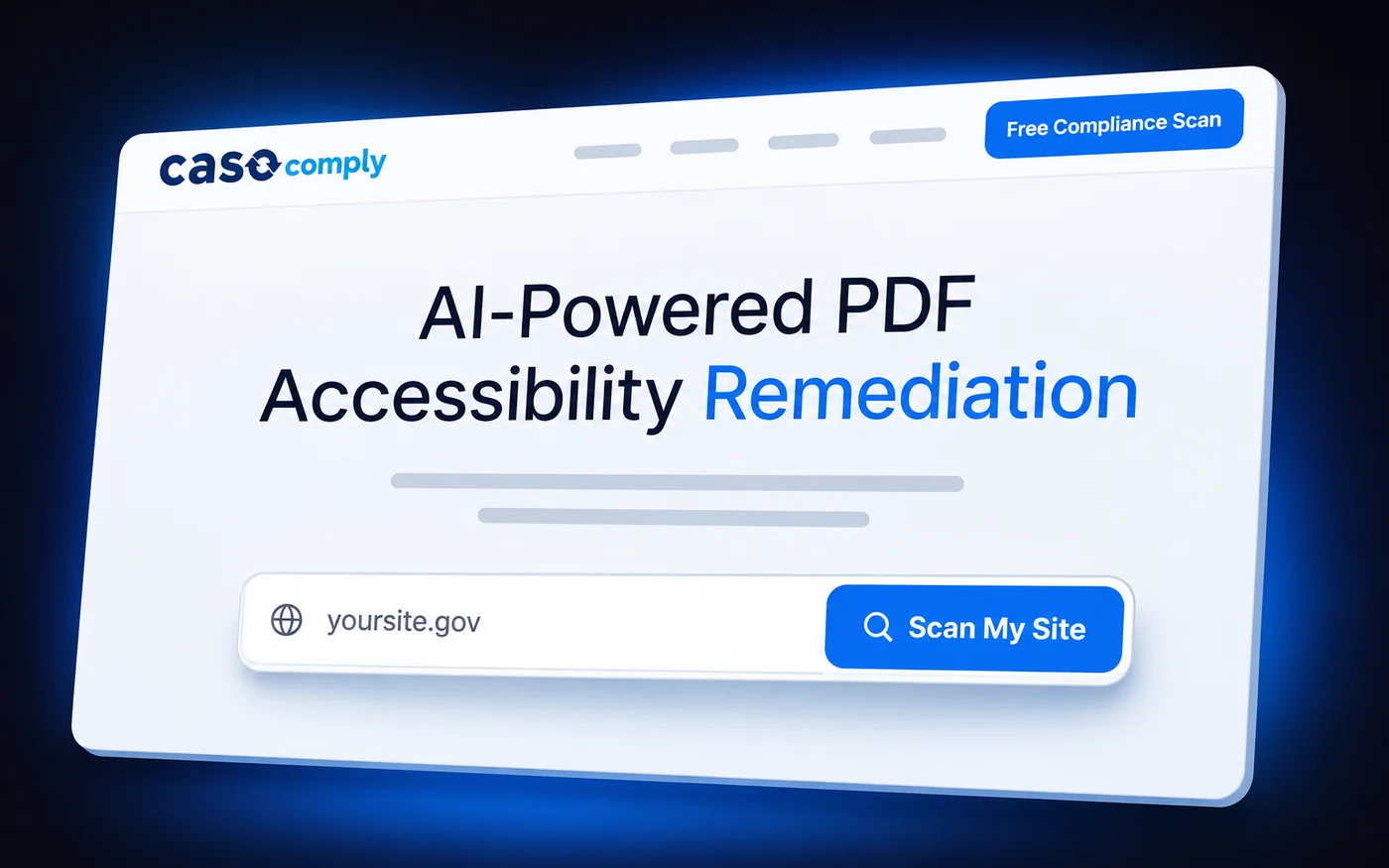
CASO Comply scans documents, processes PDF structure, and uses AI to assist with remediation. It works on the parts of a document that matter to assistive technology: tags, reading order, alternative text, and metadata. The automation does the processing. It does not replace document-specific validation or expert review.
The decisions that shaped it
Start with visibility
Scanning shows an organization which documents it has and which issues need attention.
Work on document structure
Remediation targets what determines how assistive technology reads a PDF, including reading order and tagging.
Keep validation in the process
Automated output still has to be checked against the document’s content and the requirements that apply to it. The product assists accessibility work. It is not a guarantee of legal compliance.
What we built
- Document scanning
- PDF structure processing
- AI-assisted remediation
- Human review built into the workflow
The takeaway
Automation can organize and process the document work. Accessibility quality still depends on validating the result.